Screens
From the running application.
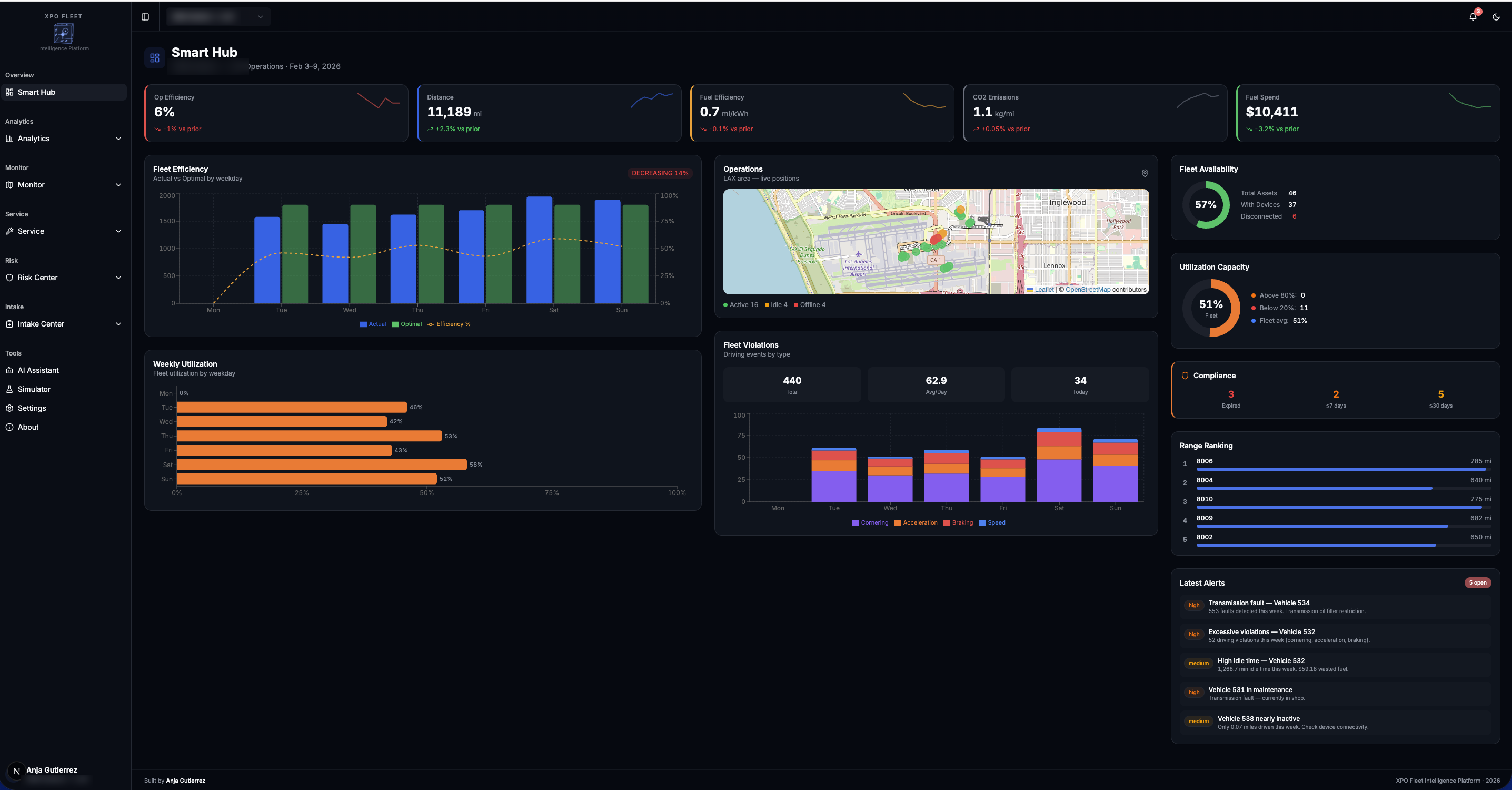
A 23-page fleet management platform built from original research — not a template, not a fork.
A full-scale fleet management platform covering analytics, monitoring, risk management, service programs, dispatch, and AI-assisted insights — built for a national transportation operation.
Every screen runs on typed mock data shaped to match real telematics distributions, so the data layer swaps for a live API without touching a component. 32 vehicles, 55 drivers, 4 preventive-maintenance programs, 22 LAX-area zones.
The point of the project was to prove a research-first process: study the real system, model the real domain, then build. The reference platform (EBAI) was analyzed across 84 screenshots and 16 exports before a single component was written.
Ten phases, research first.
| Phase | Work |
|---|---|
| Phase 0 Research | Analyzed 84 screenshots of the live EBAI platform and 16 real fleet data exports. Produced 10 research documents (10,647 lines) covering domain analysis, UX patterns, data modeling, technology selection, and competitors. |
| Phase 1–2 Architecture | Designed 21 TypeScript entity types from scratch against real operational patterns, then generated mock data matching actual telematics distributions rather than random values. |
| Phase 3–10 Build | 23 pages across 7 functional areas, 24 UI components, 6 chart types, the compliance engine, the PM alert system, and a dark-first design system. Zero TypeScript errors across the codebase. |
Designed from the research — these do not exist in the reference platform.
6-tier compliance expiration tracking across vehicle, driver, and enterprise documents. Ninety-, sixty-, thirty- and seven-day alert bands, plus critical and expired states.
Vehicle-type-specific PM schedules — 59 service items at mileage and time intervals derived from real maintenance records. Covers E-450 (Gas/CNG/EV) and Freightliner M2-106 Diesel.
Pre-Trip (38 items) and CHP 45-Day (48 items with 381 failure-mode dropdowns), digitized from the actual paper forms and CHP 34505 CVC requirements.
Pulled straight from the production codebase — unedited except for trimming.
export function getComplianceStatus(expirationDate: string | Date): ComplianceStatusInfo {
  const expiry = new Date(expirationDate);
  const now = new Date();
  const days = Math.ceil((expiry.getTime() - now.getTime()) / (1000 * 60 * 60 * 24));

  if (days < 0) {
    return { status: "expired", daysRemaining: days, color: "#EF4444", bgColor: "rgba(239,68,68,0.1)", icon: "circle-x", label: "Expired" };
  }
  if (days <= 7) {
    return { status: "critical", daysRemaining: days, color: "#F97316", bgColor: "rgba(249,115,22,0.1)", icon: "alert-triangle", label: "Critical" };
  }
  if (days <= 30) {
    return { status: "warning", daysRemaining: days, color: "#F59E0B", bgColor: "rgba(245,158,11,0.1)", icon: "clock", label: "Warning" };
  }
  if (days <= 60) {
    return { status: "caution", daysRemaining: days, color: "#EAB308", bgColor: "rgba(234,179,8,0.1)", icon: "eye", label: "Caution" };
  }
  if (days <= 90) {
    return { status: "notice", daysRemaining: days, color: "#3B82F6", bgColor: "rgba(59,130,246,0.1)", icon: "info", label: "Notice" };
  }
  return { status: "current", daysRemaining: days, color: "#22C55E", bgColor: "rgba(34,197,94,0.1)", icon: "check-circle", label: "Current" };
}export function evaluatePMStatus(
vehicle: Vehicle,
schedule: PMSchedule
): PMServiceStatus[] {
const now = new Date();
const lastServiceDate = new Date(vehicle.lastServiceDate);
const milesSinceService = vehicle.currentMileage - vehicle.lastServiceMileage;
const monthsSinceService = Math.round(
(now.getTime() - lastServiceDate.getTime()) / (1000 * 60 * 60 * 24 * 30.44)
);
return schedule.items.map((item) => {
let milesUntilDue: number | null = null;
let monthsUntilDue: number | null = null;
let alertLevel: PMAlertLevel = "current";
if (item.intervalMiles) {
milesUntilDue = item.intervalMiles - milesSinceService;
if (milesUntilDue <= 0) alertLevel = "overdue";
else if (milesUntilDue <= item.intervalMiles * 0.1) alertLevel = "due-soon";
else if (milesUntilDue <= item.intervalMiles * 0.25) alertLevel = "upcoming";
}
if (item.intervalMonths) {
monthsUntilDue = item.intervalMonths - monthsSinceService;
if (monthsUntilDue <= 0 && alertLevel !== "overdue") alertLevel = "overdue";
else if (monthsUntilDue <= 1 && alertLevel === "current") alertLevel = "due-soon";
else if (monthsUntilDue <= 2 && alertLevel === "current") alertLevel = "upcoming";
}
// Items without intervals (e.g., "as needed") stay current
if (!item.intervalMiles && !item.intervalMonths) {
alertLevel = "current";
}
return {From the running application.
The repository is private, but I'm glad to walk through the codebase live — architecture, tradeoffs, the parts that went wrong first.